Baan Thai Museum
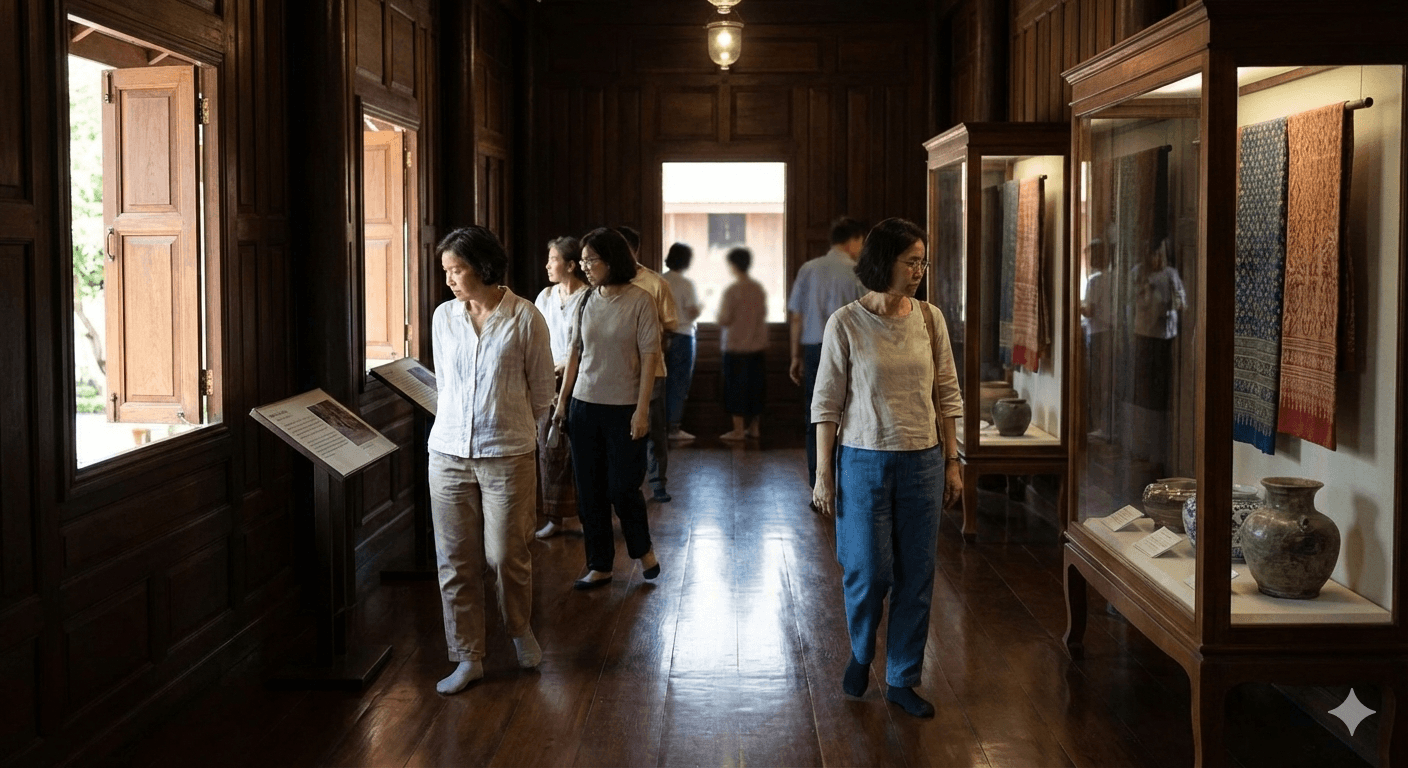
Baan Thai Museum is the first Thai museum outside the Kingdom of Thailand, in celebration of the lifetime achievement of Phrakru Surachesth Boonnam, the Abbot of Wat Buddharangsi Buddhist Temple, 15200 SW 240th St, Homestead, FL 33032, United States of America.

Our Story
Thai culture is visible around the world, but it rarely has a place to stay. Outside Thailand, it appears in food, festivals, performances, and short-term exhibitions, then disappears again, leaving only fragments behind. There is no permanent Thai House–style cultural space overseas where architecture, dress, music, dance, food, wellness, language, and belief systems exist together in the way they naturally belong. The Baan Thai Project was created in response to that absence. Initiated by Kai Whitcomb, Chairperson of the Council for Thai Culture Canada, the project aims to establish the first Thai House–style cultural museum outside the Kingdom of Thailand—designed as permanent cultural infrastructure rather than a seasonal attraction.
With a planned capital investment of 100 million Baht, Baan Thai is conceived as a self-sustaining cultural institution that uses Thailand’s soft power—fashion, arts, wellness, and gastronomy—not as promotion, but as lived experience. The intention is to allow global audiences to understand Thai culture in full, rather than through isolated pieces.
At the heart of Baan Thai is cultural integrity. One of the project’s central narratives draws from the work of Queen Sirikit The Queen Mother, whose creation of the eight traditional Thai dress styles in the mid-20th century was not merely about fashion, but about representation. These garments, developed from centuries of court textiles and crafted through Thai silk, became a way for Thailand to present itself to the world without losing its soul. Through initiatives such as the SUPPORT Foundation, this vision also sustained rural craftsmanship, linking cultural elegance with real livelihoods.
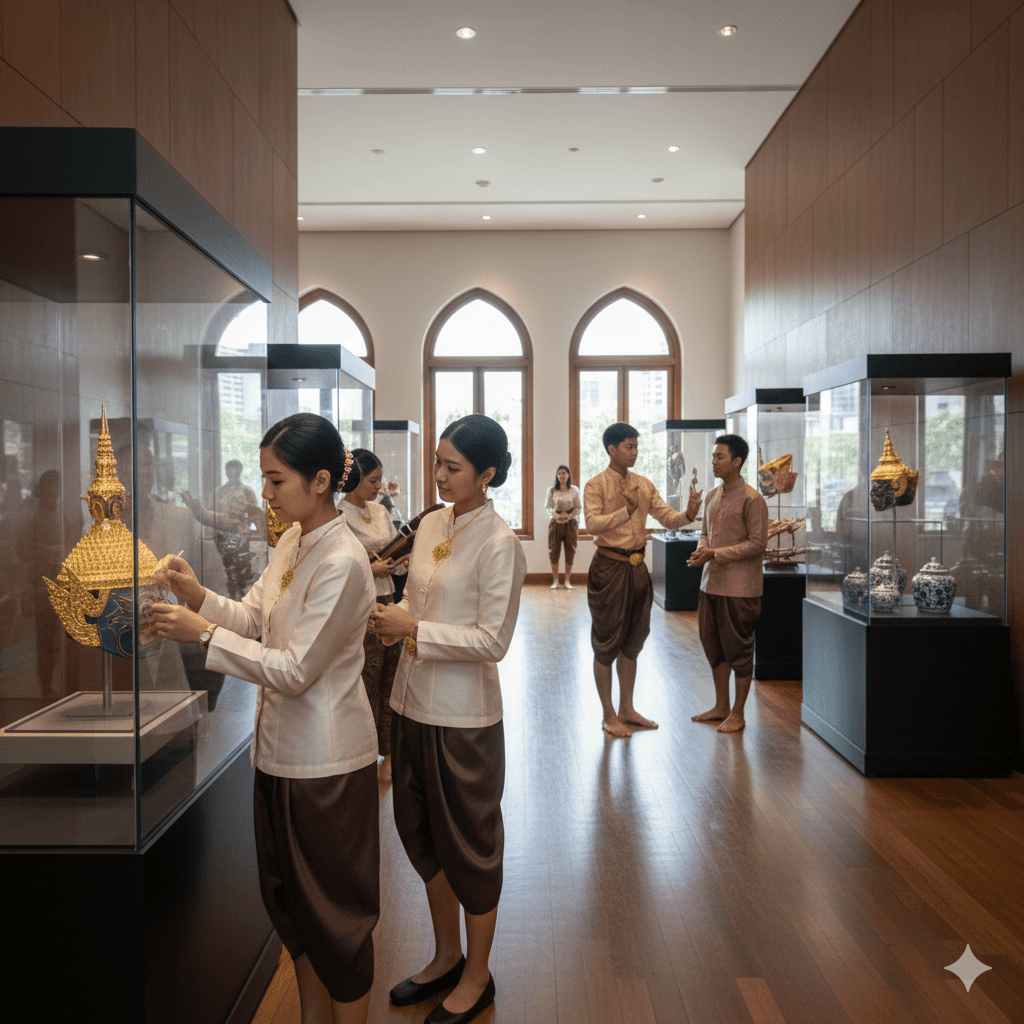
Baan Thai carries this thinking forward by presenting royal attire alongside Khon masks and costumes rooted in the Ramakien epic, classical and folk dance traditions, musical instruments, and regional artifacts from the North, Northeast, Central, and South. The aim is not to highlight only elite traditions, but to reflect the full cultural landscape of Thailand.
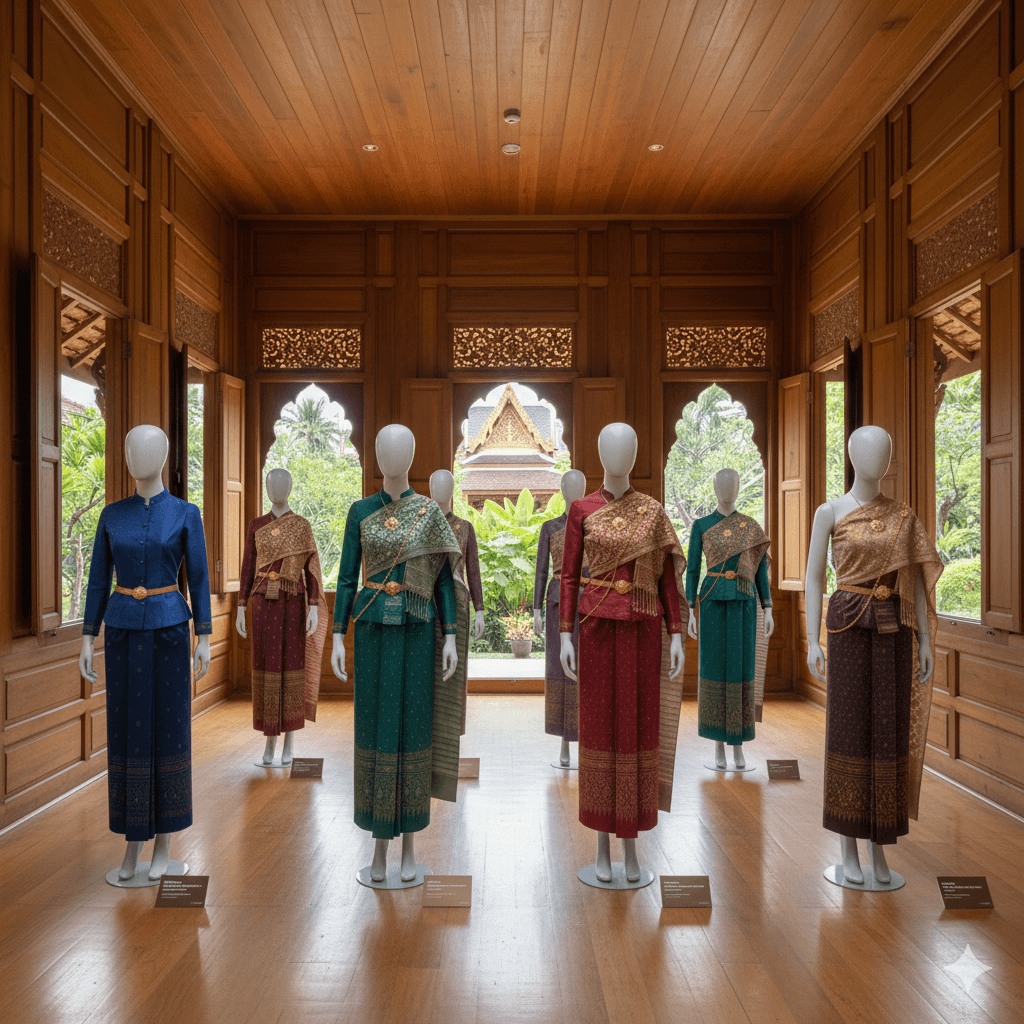
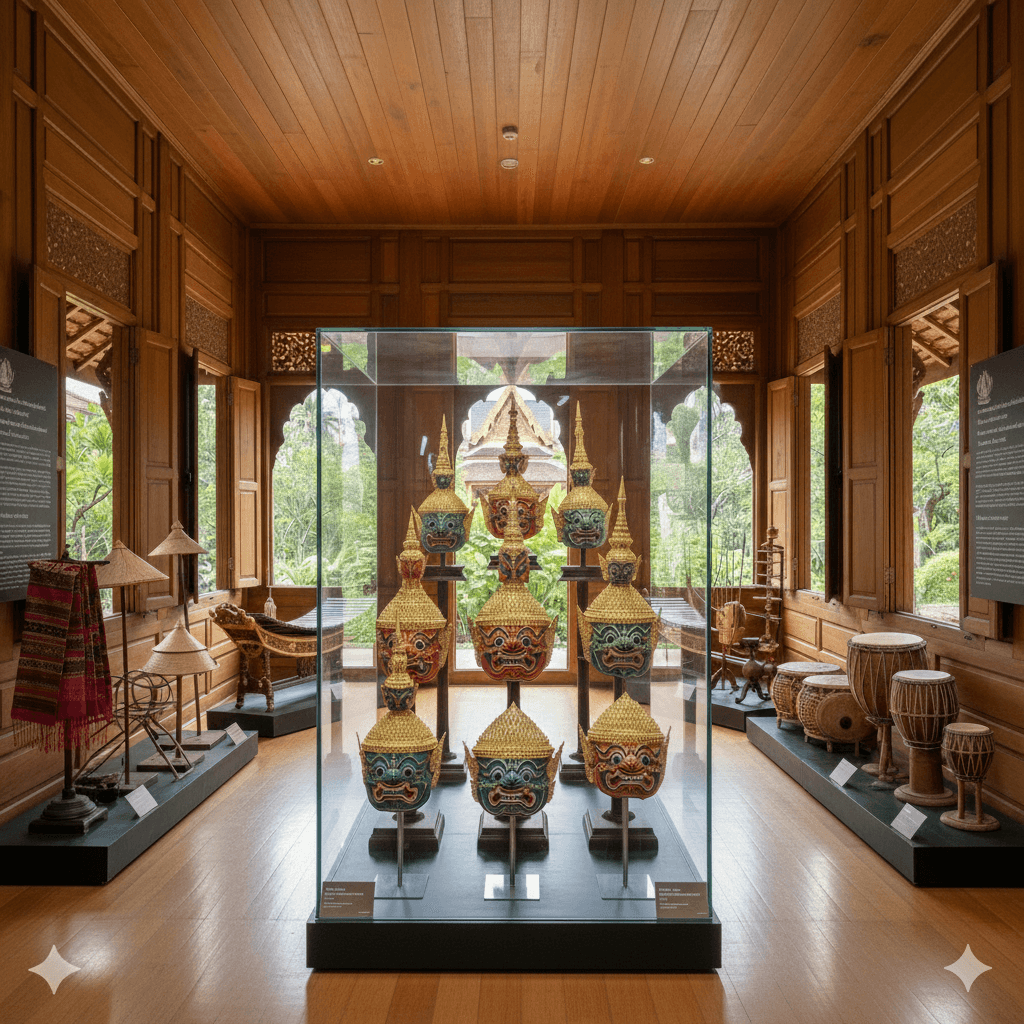
The building itself is part of the message. Baan Thai is envisioned as a traditional Thai house structure, based on modular “knock-down” teak architecture crafted in Thailand and assembled overseas. Adapted carefully to meet local building codes, the structure preserves its original form and philosophy. It is not decoration. The house itself is the first exhibit, quietly communicating Thai knowledge, climate wisdom, and craftsmanship the moment someone enters.
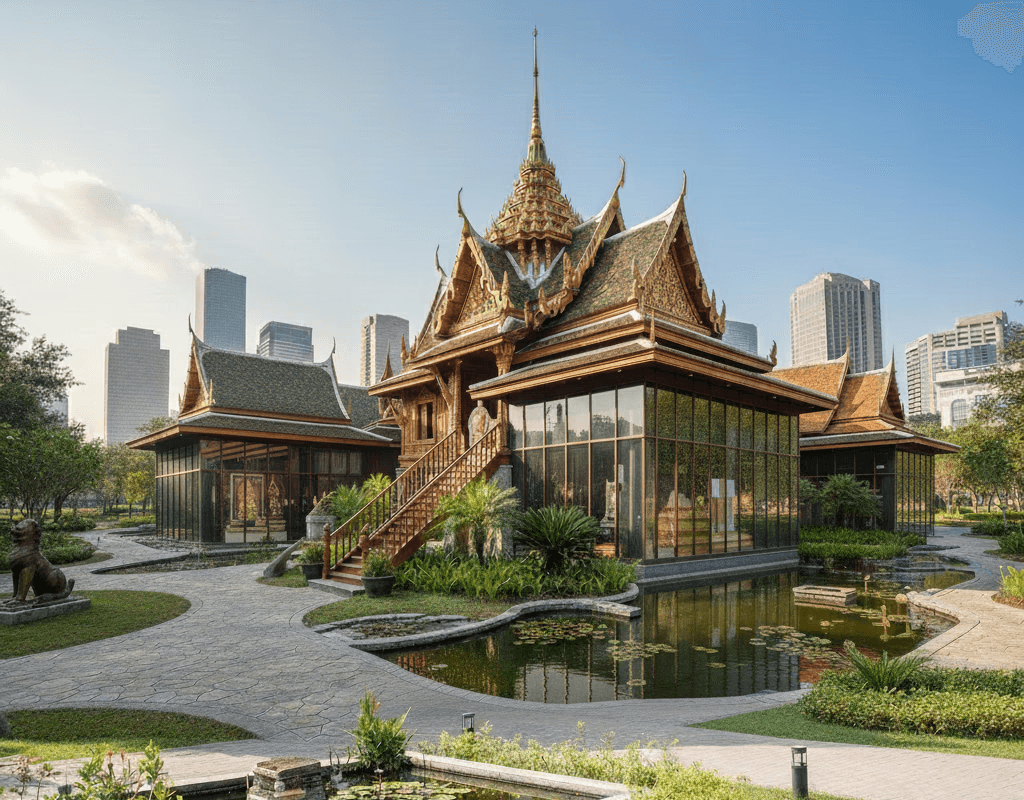
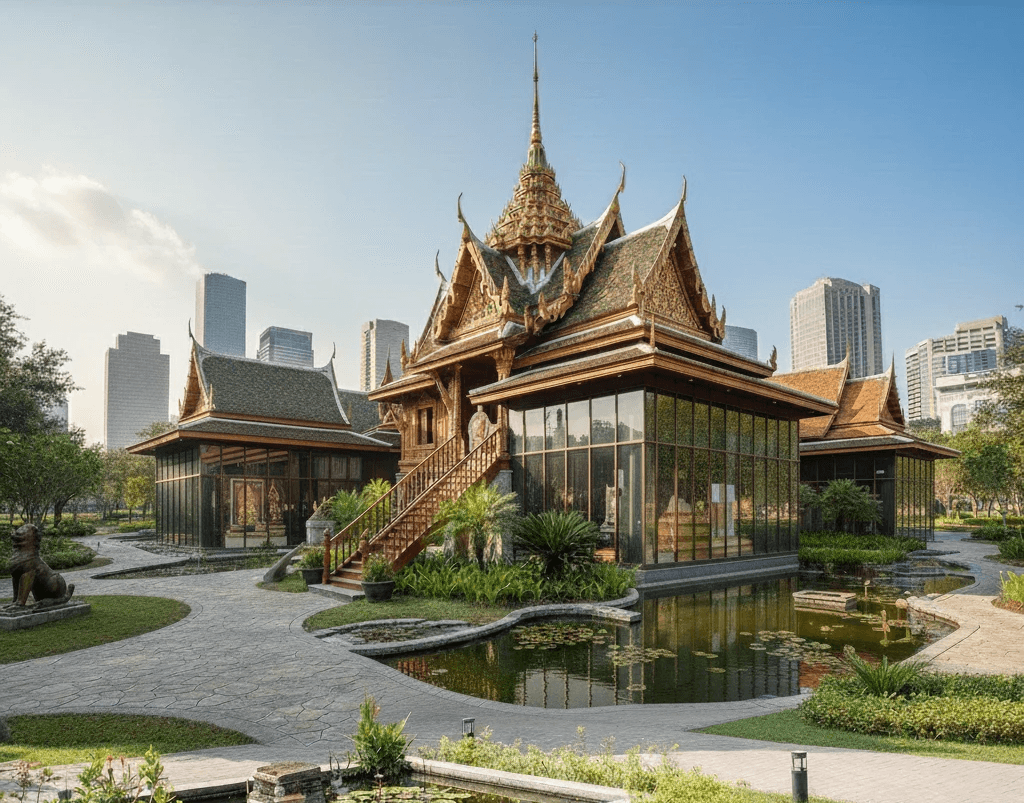
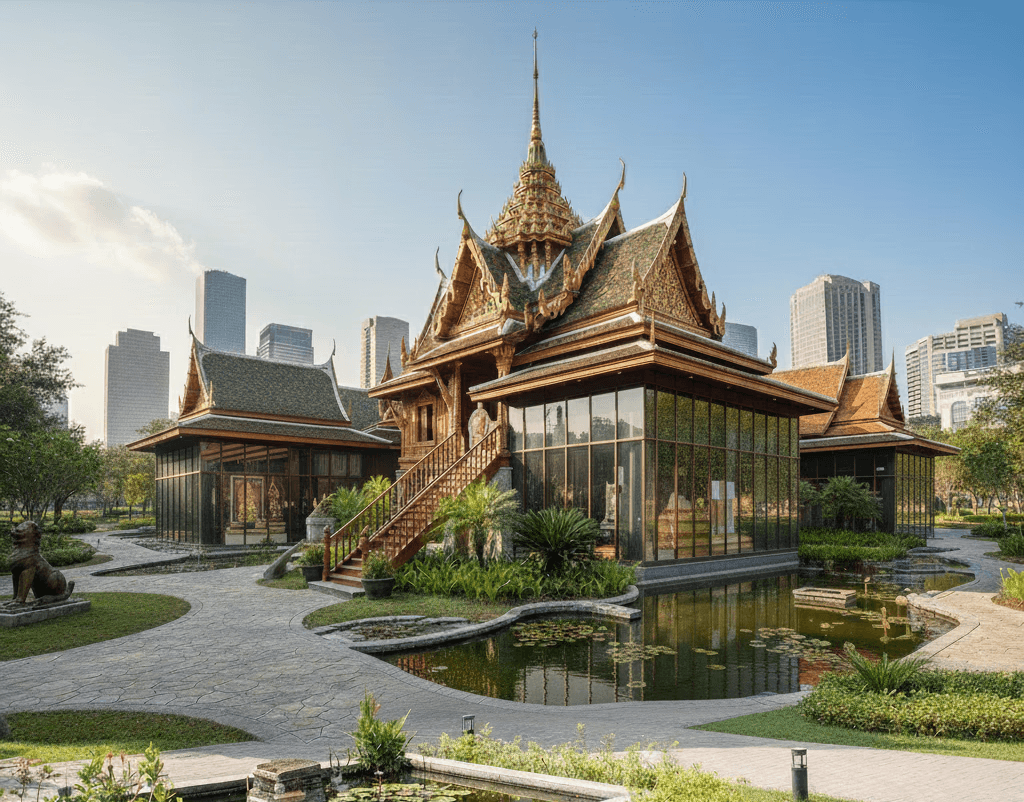
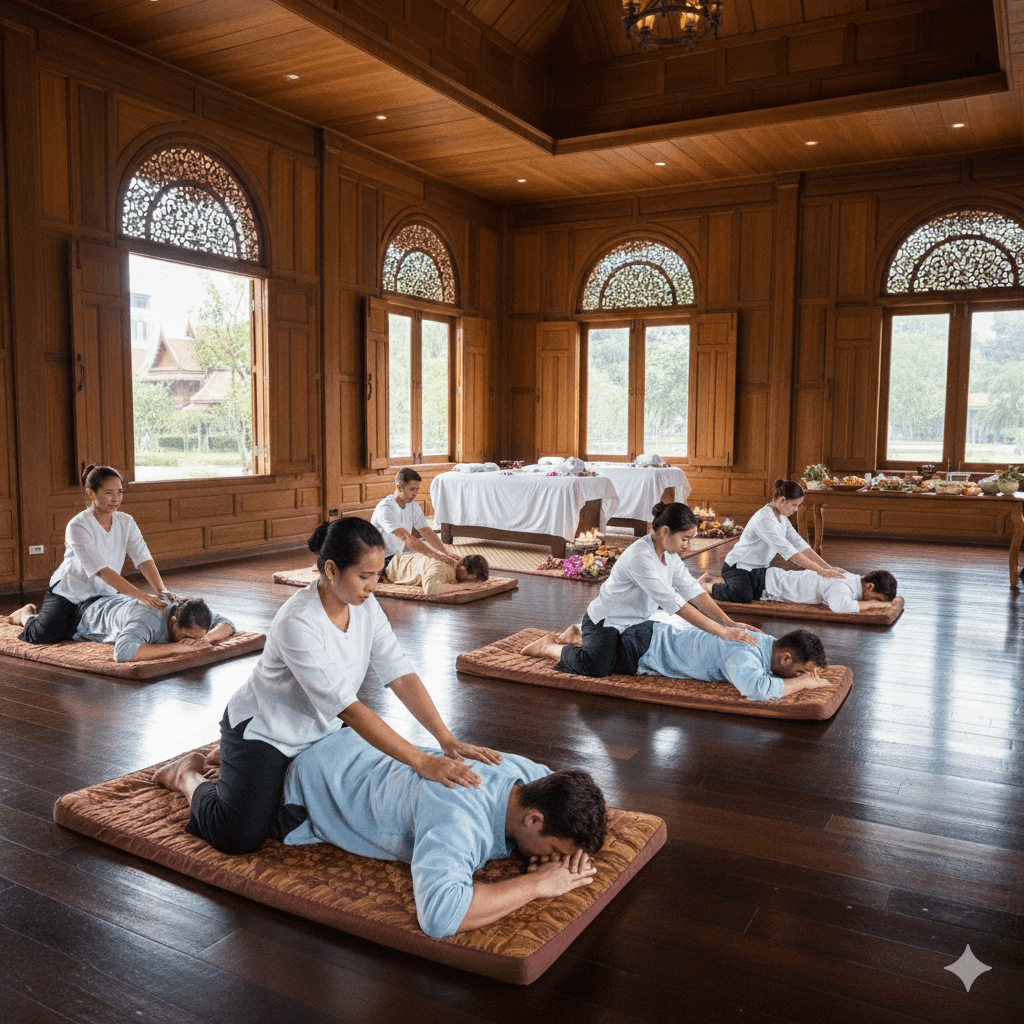
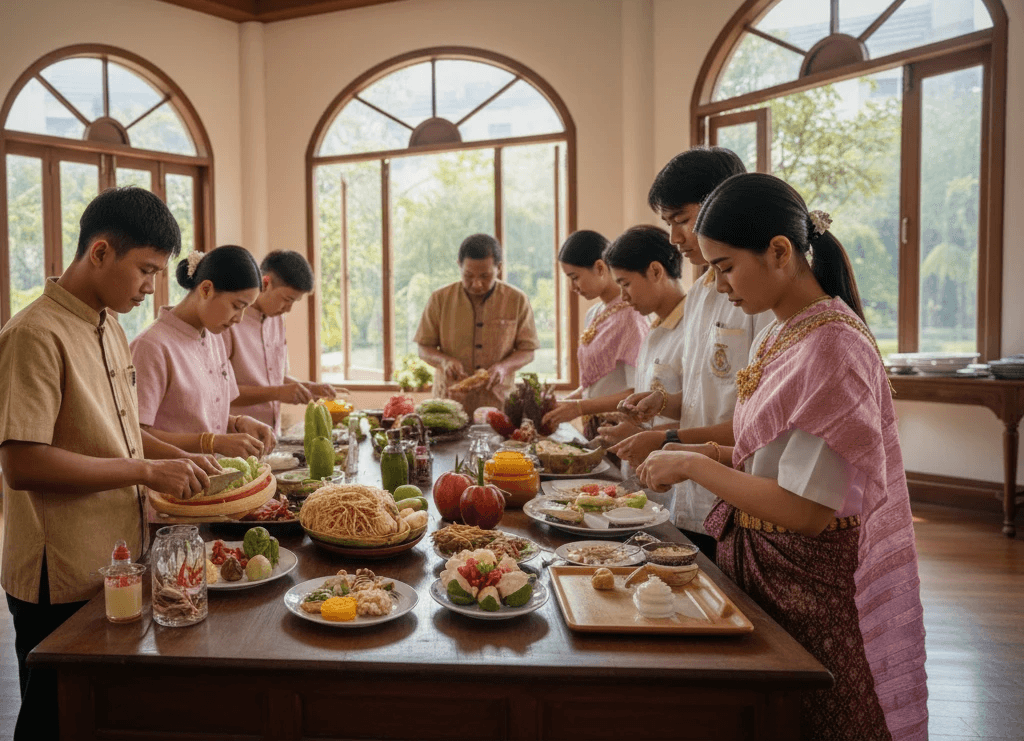
Baan Thai is designed to be active. Visitors not only observe culture; they participate in it. Programs include workshops in Thai music and dance, language, traditional Thai massage, Vipassana meditation, royal cuisine, street food, herbs, and wellness practices. These activities deepen understanding while also forming a core part of the project’s long-term sustainability.
Food plays a similar role. The Baan Thai restaurant operates as a monthly immersive experience aligned with Thailand’s festival calendar, using a reservation and membership model that supports both cultural storytelling and predictable revenue.
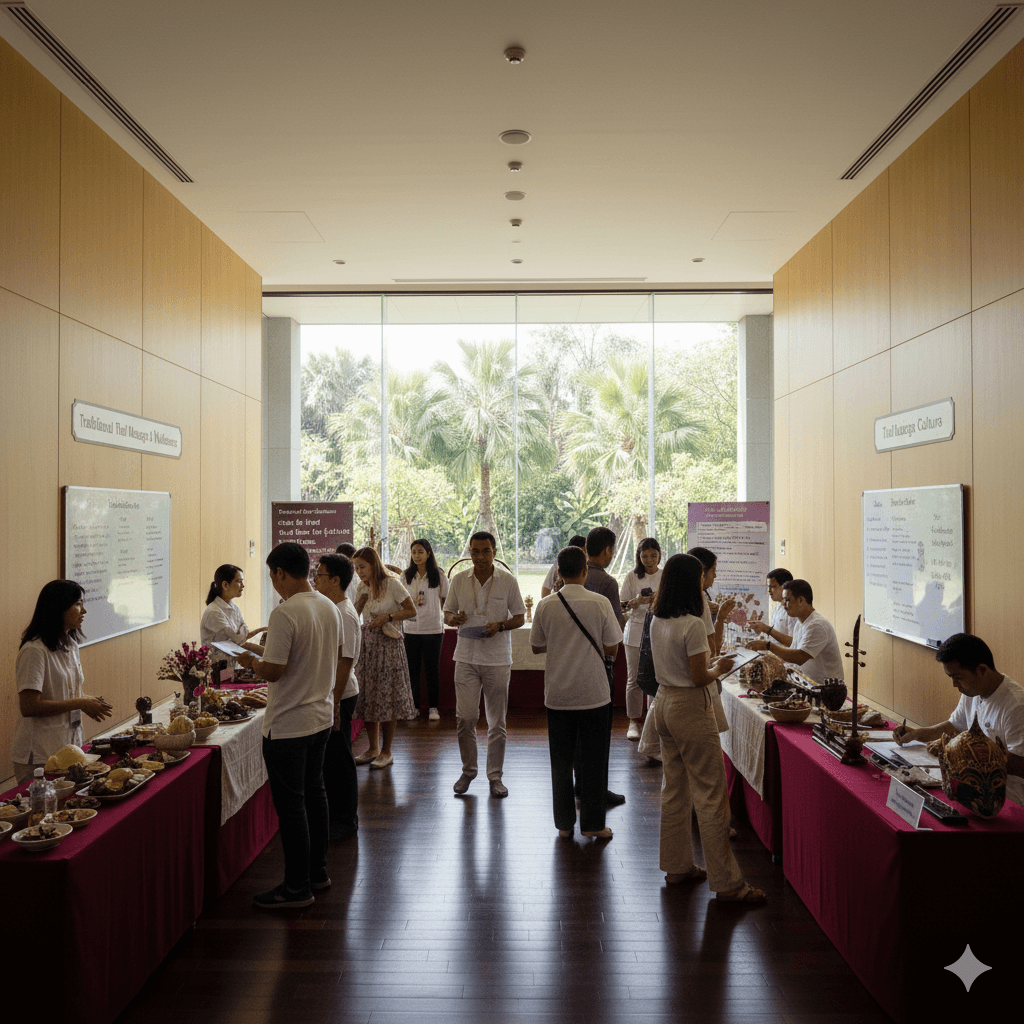
Beyond public programming, Baan Thai is designed to function as a practical extension of Thai educational institutions. The project opens the door for formal partnerships with universities and cultural organizations in Thailand, particularly those focused on business, Thai culture, performing arts, music, and traditional crafts.
Through these partnerships, students and emerging professionals will be able to take part in structured apprenticeships and overseas placements with Baan Thai. This allows them to gain real-world international experience while working directly with Thai cultural materials, performances, operations, and audiences abroad. For students of Thai dance, music, language, cuisine, and cultural management, Baan Thai becomes a place where learning moves beyond the classroom and into lived practice.
This exchange benefits both sides. Thai institutions gain an overseas platform for their students and programs, while Baan Thai remains deeply connected to Thailand’s cultural ecosystem—continuously refreshed by new generations of practitioners, educators, and cultural leaders. In this way, Baan Thai is not only preserving culture, but actively training the people who will carry it forward internationally.
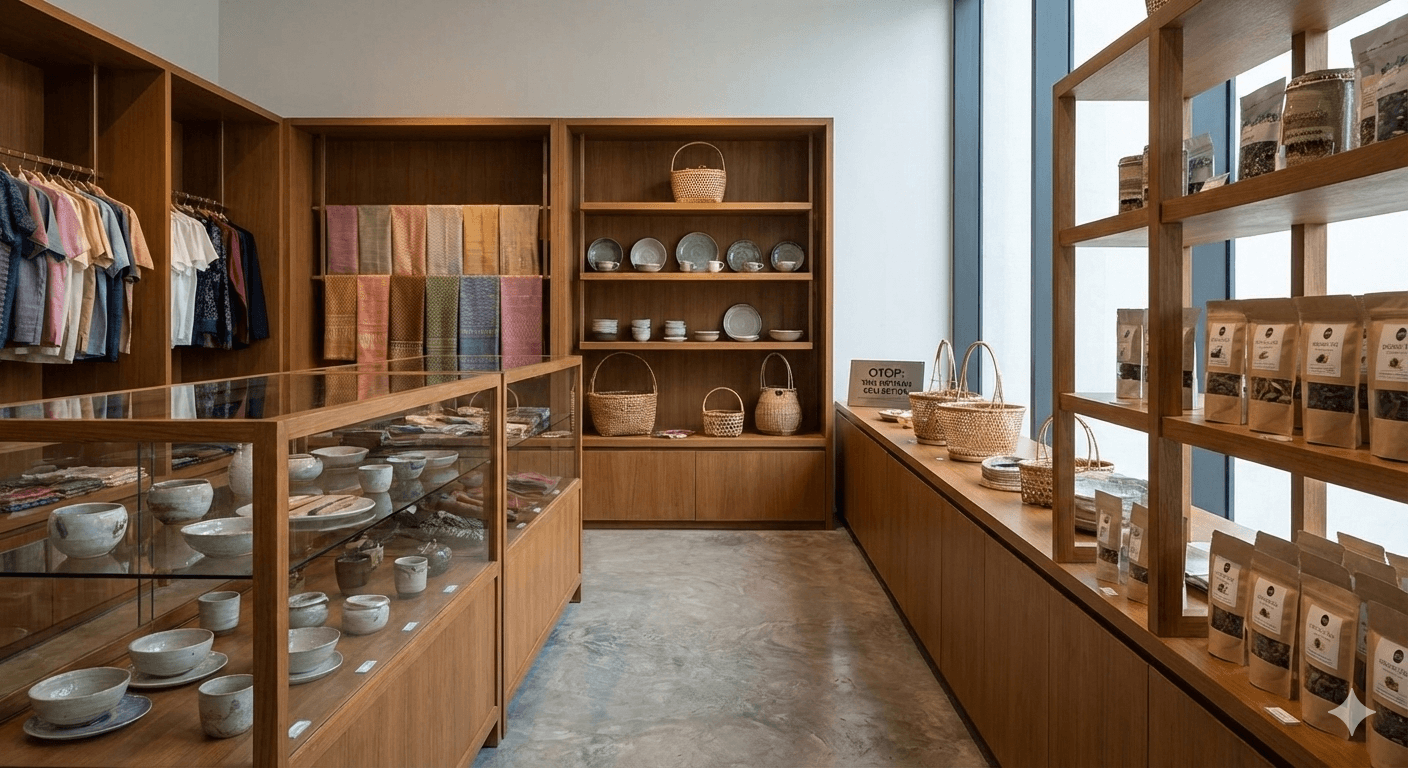
A curated OTOP gift shop connects Thai artisans directly with international audiences, turning retail into cultural support rather than souvenir sales. Revenue is designed to come from multiple sources, including education, dining, workshops, retail, and private cultural events, allowing the institution to remain independent while staying true to its purpose.
With Toronto and Miami identified as high-potential locations, the project is designed around a financial structure that targets operational break-even within the first two years. More than a short-term venture, this is an investment in permanent cultural presence—built with care, built to endure, and meant to ensure Thai culture overseas is represented with accuracy and respect for generations.